
Trending
This story is from August 20, 2018
Another nail in state capital’s coffin
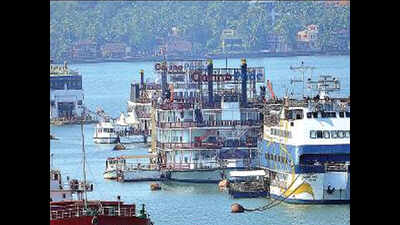
It is useful to review the long string of lies, reversals and u-turns that have taken place since casinos were first allowed an extension of their supposedly temporary moorings in the Mandovi

But why Panaji ranked so poorly is no laughing matter. This new index well-conceived by minister Hardeep Singh Puri reveals comprehensive mismanagement. Across 55 ‘core indicators’ and 22 ‘supporting Indicators’, we see the state capital in catastrophic decline. When it comes to housing inclusiveness, it is the worst in India, scoring zero (Ghaziabad scored the highest). In the vital category of mixed land use, it earned the lowest possible number, 0.01 (Greater Mumbai scored 4.75 out of 5).
Water supply, transportation, unemployment. In each of these, there is evidence of an overwhelming crisis. Not only is Goa’s flagship way behind other cities in India, it is still falling fast to even worse.
That nosedive is also reflected in the Swachh Sarvekhshan 2018 report. Here, the MoHUA assesses India’s cities on cleanliness based on 19 indicators. In 2016, Panaji earned an already worrisome but still respectable 16th place ranking (out of 500 cities). But in 2017, for the multitude of reasons any city resident could list from experience, it plummeted to 90th place. Now really rapid deterioration. No one can be surprised that the latest report released last month finds Panaji ranked 155th in terms of cleanliness. We are experiencing an historic tragedy, for which future generations will know precisely where to lay the blame.
Successful administration, wherever it has occurred in the world, is all about accountability. The flaw in Goa’s polity is its absence. In some fundamental ways, democracy has been rigged. Much of the system of state is subverted to serve the flourishing of criminal enterprise. Crucially, there is no oversight. At this very moment, even as Panaji slumps straight into the gutter, the allegedly responsible authorities kite-fly an array of nonsense: Multi-million dollar ropeway to nowhere, RFID-tagged garbage bins, expensive digital video cameras on every lamp post. Such a range of wasteful, stupid ideas are being sold most cynically under the label of smartness.
Will this heist take place unchecked? The record indicates it probably will. Here it is useful to review the long string of lies, reversals and u-turns that have taken place since casinos were first allowed an extension of their supposedly temporary moorings in the Mandovi. That initial act of leeway has given way to an unmitigated farce, from broken election promises to a string of broken deadlines. The casinos stayed, they multiplied, and have now become much bigger than they were before. They are a law unto themselves, without any kind of regulatory mechanism in place. Now, the city administration seems to have abdicated the entire waterfront to them, only reluctantly taking back some encroachments after public protests.
This Independence Day was a perfect snapshot of what has happened to Panaji. The main flag ceremony was opposite the old secretariat, where the tiranga was first raised in 1961. But now the backdrop signage is all winking foreign women, and a neon-lit welcome that everything is for sale.
The writer is a photographer and widely-published columnist. Views expressed are personal.
End of Article
FOLLOW US ON SOCIAL MEDIA










Hot Picks
TOP TRENDING
Trending Stories
In City
Entire Website
- Mumbai schools and colleges shut tomorrow amid IMD's heavy rain alert, BMC issues notice
- Ja'Marr Chase Luxurious Lifestyle: Expensive Properties, net Worth, Car Collections and More
- 'Nandini': The new ghee supplier for Tirupati laddus – who owns it?
- India’s rising influence in the Asia Power Index surpassing Japan and China; ranks 3rd in the list
- 3 Reasons Why Bad Blood 2024 Will Make An Epic Return To WWE PLE Calendar
- 'Diddy List': Names of celebrities connected to Sean Combs viral
- EY Pune employee Anna Sebastian's death: Probe finds MNC lacked labour welfare permit
- Virat Kohli, Gautam Gambhir, Rishabh Pant's buggy-ride goes viral; fans say 'teeno bhai tabahi' - Watch
- 'Virat Kohli has lost momentum, can't beat Sachin Tendulkar's record'
- Pope offers refuge to jailed Suu Kyi: Report
- Kolkata horror: RG Kar evidence 'falsified' at Tala police station, CBI claims in court
- 200mm rain in 5 hours swamps Mumbai, results in 4 deaths
- Here’s why free airport lounge access was denied to many flyers
- Canadian PM Justin Trudeau survives no-confidence vote
- 'Vinesh Phogat ne ek Olympic medal ka nuksaan karvaya'
- Minors with mansions: Now, wealthy Indian 'kids' own foreign properties
- Once Modi hangs up his boots, what will be his enduring legacy?
- Flipkart claims 3 users got iPhone 13 at Rs 11: What company said
- Putin issues nuclear warnings to West, Ukraine calls it 'blackmail'
- China ties ‘significantly disturbed’, will influence entire world: Jaishankar

Popular Categories
Hot on the Web
Top Trends
Trending Topics
Living and entertainment
Latest News
BJP is ending reservation by ending permanent jobs, government education, says HoodaAstraZeneca gets nod to launch cancer drugMountaineers scaled unclimbed high peak, names it 'Tsangyang Gyatso Peak’ after Sixth Dalai LamaWitnessed a different level of dedication from Rohit Sharma, Virat Kohli: Akash Deep8 Lesser-known uses of ghee beyond cookingKaun Banega Crorepati Season 16: Amitabh Bachchan recalls the shooting of 'Sara Zamana' from Yaarana; says 'I was getting electric shocks'India chess federation announces Rs 3.2 crore rewards for Olympiad-winning teamsTurn stubble into bio-CNG, bio-LNG, Gadkari says Haryana farmer can be fuel provider tooCoromandel International to buy additional 8.82 per cent stake in BMCC‘Yek Number’ trailer launch: Aamir Khan, Raj Thackeray, Rajkumar Hirani and Sajid Nadiadwala grace the eventIndia urges citizens to avoid travel to Lebanon amid escalating tensionsLeo, Daily Horoscope Today, September 26, 2024: Positive developments are expected in love lifeSony unveils iridescent "Chroma Collection" for PS5 Slim and DualSenseJ&K will never have a BJP government: Mehbooba MuftiStanford Graduate School of Business tops QS Global MBA Rankings 2025: What is the Military/Yellow Ribbon scholarship program that it provides to the studentsDelhi CM Atishi gets 'Z' category securityFirst Blood Match, Stretcher Match, and 3 other classic stipulations that should return in WWEHere’s why free airport lounge access was denied for many flyers
Copyright © 2024 Bennett, Coleman & Co. Ltd. All rights reserved. For reprint rights: Times Syndication Service